
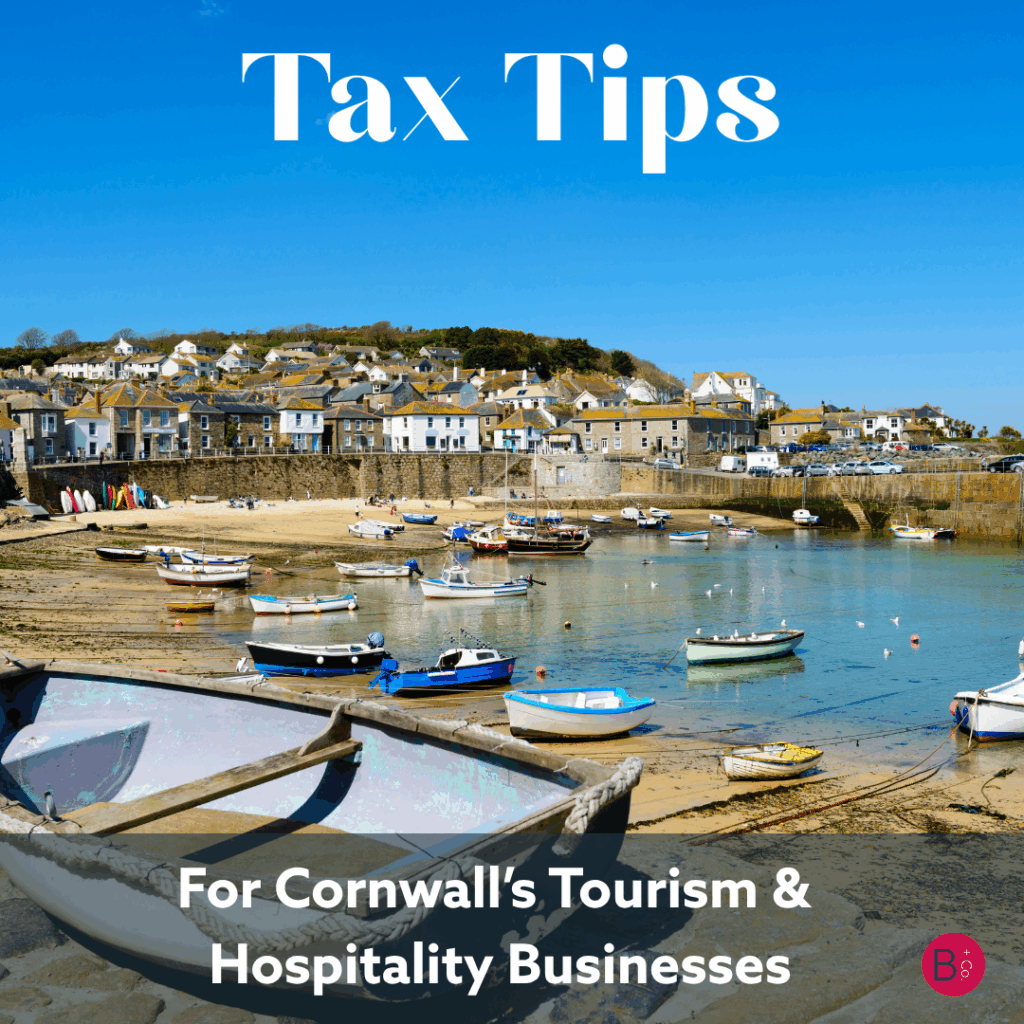
Running a tourism or hospitality business in Cornwall is rewarding but comes with unique financial challenges. Whether you manage holiday lets in St Ives, run a B&B in Hayle, or serve cream teas in a coastal café, staying on top of your tax and accounts is crucial.
Seasonal income, changing regulations and managing staff can all make staying on top of your finances feel overwhelming. The good news? A bit of tax know-how can go a long way in helping you save money and stay organised. As a small accountancy practice based in Hayle, we work closely with local business owners across West Cornwall. Here’s our guide to our tax tax tips for Cornwall’s tourism & hospitality businesses.
Know your allowable expenses
One of the easiest ways to reduce your tax bill is to make sure you’re claiming all your business expenses. For a business in Cornwall, this goes beyond the obvious. Make sure you’re keeping records for –
- Property costs – this includes rent, business rates, utilities, insurance and interest on any business loans or mortgages. If you run a B&B from your own home, you can claim a proportion of your household bills.
- Repairs & maintenance – costs for routine upkeep are fully deductible. However, be careful to distinguish between a repair (fixing a broken window) and an improvement (installing a new conservatory), as the latter is a capital expense and treated differently.
- Goods & supplies – Guest toiletries, cleaning products, stock for your café or restaurant, and even wasted stock can all be claimed.
- Wages & staff costs – this includes salaries, National Insurance contributions and pension payments. With seasonal staff a common feature of the Cornish economy, a robust payroll system is vital.
- Marketing & advertising – costs for your website, online booking platforms, local advertisements and brochures are all tax-deductible.
Get your Head around VAT, especially for Holiday Lets
VAT can be one of the most complex areas for tourism businesses. The standard UK VAT rate is 20%, but the rules can get murky, especially for holiday accommodation.
- The £90,000 threshold – if your business’s taxable turnover exceeds the VAT registration threshold of £90,000 in any 12-month rolling period, you must register for VAT.
- Furnished Holiday Lets (FHLs) – unlike long-term residential letting, income from a furnished holiday let is generally considered a business activity and is subject to VAT. This means that once you exceed the threshold, you must charge VAT on your rental income.
- Voluntary registration – even if your turnover is below the threshold, it might be beneficial to register for VAT voluntarily. This allows you to reclaim VAT on your business expenses, which can be a significant saving, especially if you have high start-up costs or are making a large investment.
Not sure if you’re approaching the threshold? Our team in Hayle can help you track and register at the right time.
Don’t overlook capital allowances
For many hospitality businesses, significant tax relief can be found in a place often missed, capital allowances. This isn’t just about small items, it’s about major investments that are essential to your business.
Capital allowances allow you to deduct the cost of certain assets from your profits before tax is calculated. These are not a day-to-day expense and include a wide range of ‘plant and machinery’ within your property, such as –
- Commercial kitchens – ovens, fridges, extraction fans and all the fixtures that make up your kitchen.
- Guest Amenities – beds, furniture, sound insulation and even hot tubs.
- Integral Features – heating, electrical and lighting systems.
Many of these items are ‘embedded’ in the building and can be overlooked. A specialist review can often uncover significant unclaimed allowances, leading to a substantial reduction in your tax bill.
Be Ready for Making Tax Digital (MTD)
Making Tax Digital for Income Tax Self Assessment (MTD for ITSA) is set to revolutionise how sole traders and landlords report their income to HMRC. If you’re a sole trader with a holiday let or a B&B, you will need to be ready.
- Digital Record Keeping – MTD requires you to keep digital records of your business income and expenses. This means moving away from a shoebox of receipts and embracing a digital accounting system.
- Quarterly Updates – instead of one annual tax return, you will be required to submit quarterly summaries of your income and expenditure to HMRC through MTD-compatible software.
- Plan Ahead – the transition is happening in phases, with the threshold for mandatory compliance lowering over the next few years. Now is the time to get your digital systems in place.
As local accountants in Hayle, we can help you choose the right digital tools and stay compliant without the hassle.
How an accountant can help
At our friendly accountancy practice in Hayle, we specialise in helping tourism, hospitality and holiday let owners across Cornwall. We understand the seasonal ups and downs, VAT challenges and HMRC rules that affect your business.
Whether you need help with:
- Setting up a holiday let business
- Managing VAT and payroll for seasonal staff
- Planning for Making Tax Digital
- Claiming capital allowances on property improvements
We’re here to help—no jargon, no stress.
If you run a small business in Cornwall and need tax or accounting advice, contact us today. We’re based in Hayle and love supporting our local community. We hope you enjoyed reading our tax tax tips for Cornwall’s tourism & hospitality businesses.